
Laser hair removal for men is on the rise — but honestly? It’s still not as common as it should be. Facial hair grooming is a massive part of self-care for so many men, yet most are still stuck in a cycle of razors, rashes, and reshaping.
Let’s talk beards.
Beards are a big deal. Whether you’re going for that sharp fade into the sideburns or full Viking realness, a good beard is all about precision. Men often spend ages shaving in just the right angles, trimming down stray hairs, and praying their lines come out even. One wrong move, and suddenly it’s all patchy slithers where the symmetry used to be.
So why not just laser it?
Laser facial hair removal for men is one of the cleanest, most effective ways to keep your grooming routine sharp — permanently.
No more constant shaping. No more razor burn. No more battling that one bit that always looks uneven.
What about sensitivity?
Here’s the deal:
Men’s facial hair is dense. The skin underneath? Often sensitive — especially after years of shaving. That combo causes:
- Irritation
- Redness
- Ingrown hairs
- Painful razor cuts
Laser completely changes the game. It removes the problem at the root (literally). It can reduce or even eliminate the daily shaving routine, depending on your goals.
But what if I still want to shave?
You can still shave — just without the drama. Laser doesn’t have to remove all the hair unless that’s what you want. Some men just reduce the density so shaving becomes smoother, faster, and less irritating. You’re in control.
Bonus: The Neckline Upgrade
A lot of my male clients also treat the back of the neck during their facial laser course. Why? Because it keeps their neckline looking crisp even when their haircut’s overdue. No more fluffy regrowth sneaking out the collar — just clean, fresh edges that always look intentional.
Ready to stop wrestling your razor and start owning your grooming?
Book a consultation for facial laser hair removal at Remedi and experience smoother, cleaner, stress-free skin — permanently. Whether you're going for full removal or just sharper lines, we’ll tailor your treatment to suit your style.
Can I begin my laser journey?
Taking a look at the hair colour chart will give you a rough indication if you will be suitable for laser hair removal.
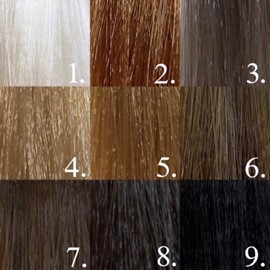
My Nd:YAG Medical grade laser is safe to treat all skin types on the Fitzpatrick scale from fair to black skin. When treating darker skin types, the energy needs to be adjusted accordingly as the melanin in the skin will absorb the light energy causing risks for potential burns and hypopigmentation. However, with the right experience and knowledge darker skin types can be treated safely and effectively.
Beside those with blonde/white/grey and red hair, there are a few contra-indications which may stop or temporarily stop you being able to have treatment.
Several factors go into making someone a good candidate for laser hair removal, and unfortunately it is not suitable for everyone. To understand these factors, it’s important to understand how lasers work when targeting hair.
Lasers are a type of pulsing light that is very intense. This light targets the melanin in the hair, which is what gives the hair its colour. By targeting the melanin, the laser source energy is converted into heat energy which is absorbed by the shaft of the hair subsequently damaging the blood supply to the hair follicle inhibiting growth.
With that in mind, your specific hair and skin types make a difference in the effectiveness of laser hair removal, the darker the hair the more energy that can be absorbed and the more effective the treatment.
There are many reasons why men and women decide to have hair removal, some for cosmetic reasons some medical reasons and some for insecurity issues. Laser is the best solution for people who suffer with irritation from other forms of hair removal such as shaving and waxing.
Razor bumps burns and rashes can be painful and unsightly- you can see improvements from as little as one session. A common side effect from waxing can be in growing hairs which too can become very painful. Laser will drastically help in growing hairs and also improve the skin tone and texture where pigmentation has occurred due to scarring, as the laser not only targets the hair follicle it will also rejuvenate the skin.
Firstly, you have genetically determined (hypertrichosis) some people are just hairier than others, different ethnicities can play a part.
Secondly, you have topical hair growth. This is caused by stimulation such as shaving/waxing, ever wished you hadn’t shaved that fine fluffy hair on your stomach when you were a teenager? As now you have thick black terminal hairs growing up to your navel. Or that one hair on your chin has turned into 6?
Thirdly you have systemic, this is endocrine stimulated and can be caused by things like polycystic ovaries or thyroid imbalances. Please see the tab Hirsutism if this is the category you feel you fall into as this will change your treatment plan slightly.
Laser hair removal is a medical procedure that uses a concentrated beam of light (laser) to remove unwanted hair.
During laser hair removal, a laser emits a light that is absorbed by the pigment (melanin) in the hair. The light energy is converted to heat, which damages the hair follicle within the skin. This inhibits or delays future hair growth. Multiple sessions are needed for permeant laser hair reduction. This is due to the hairs growth cycle which has four different stages- Anagen (growing phase) Catagen (transition phase) Telegen (resting phase) Early Anagen (start of growing phase) Laser is only effective in Anagen and early Anagen, where the hair follicle has a blood supply.
In a little more detail… I use a medical grade laser with a wavelength of 1064nm its infrared radiation is invisible to the naked eye and typically pulses 6 times in every 1.5 millisecond. This is how the heat energy only destroys the melanin in the hair and not the skin. The laser delivers energy measured in Jules which will vary according to the client’s skin tone. Dark hair contains a molecule called Melanin. Melanin absorbs a wide range of wavelengths of light especially in the ultraviolet part of the spectrum (this is how we tan in the sun) As the Melanin absorbs the laser energy the hair heats up to well over 70 degrees causing it to burn and vaporise the water in contains. The object is to not actually destroy the hair it’s to use the hair to destroy the germ cells in the follicle that produce the hair in the first place- rupturing the inner root shaft and damaging the outer root sheath.
The cells suffer damage when their temperature rises above 60 degrees because at that temperature the bonds in the protein and collagen molecules begin to break down and that’s a process called denaturation. The hotter and the longer that, that remains at a high temperature the more denaturation takes place and the higher the likelihood that the cell will die. If you cause enough damage to the cells in the follicle it will inhibit the hair from growing back.
Do people notice my excessive hair growth? Perhaps. Do they care? Likely not. But does that mean my feelings about it are invalid? Absolutely not.
Many of us carry insecurities about things that others might overlook or dismiss. Excessive hair growth, especially in areas outside what society considers “normal,” can deeply affect confidence, self-esteem, and even daily interactions. We live in a world where social media constantly pushes ideals about beauty, often defining how we “should” look. However, confidence isn’t about meeting anyone else’s expectations—it’s about feeling good in our own skin.
Unwanted hair growth can be particularly challenging for some. For example, conditions like hirsutism, often triggered by elevated androgen levels, can cause excessive hair growth in areas where it typically wouldn’t appear. While some experience this due to conditions like PCOS or hormonal imbalances, others may simply have a genetic predisposition to darker or coarser hair in certain areas. For many, it’s not just about physical appearance but about reclaiming a sense of normalcy and confidence.
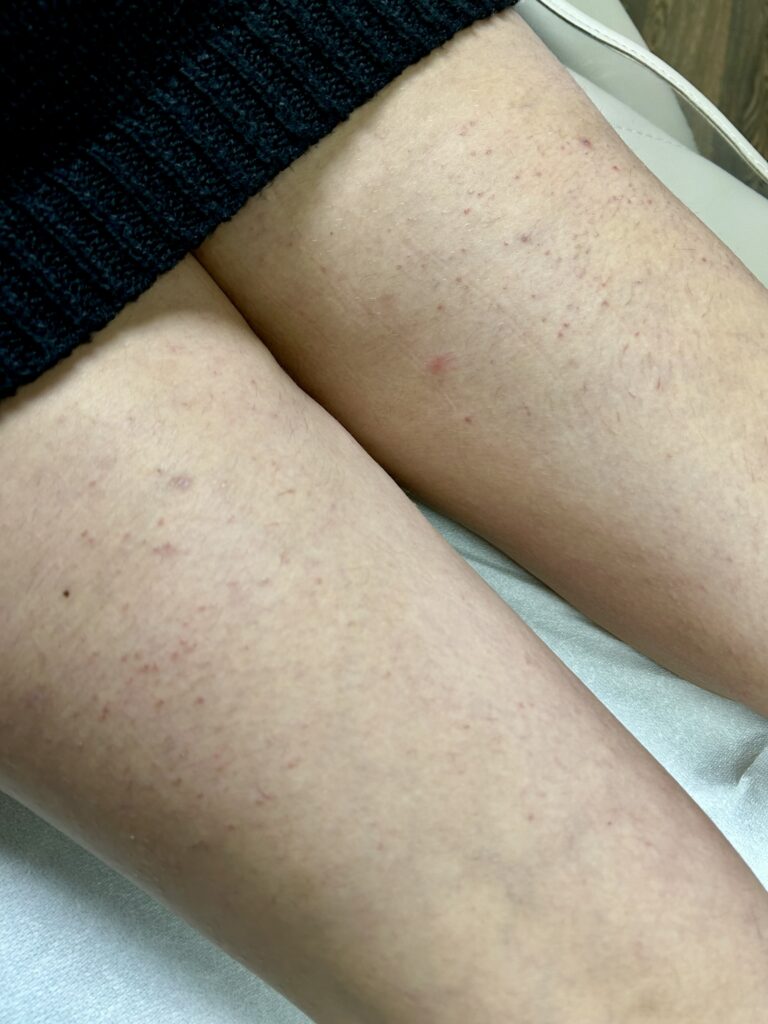
Recently, I met a client during a consultation who shared how her confidence had been impacted by excessive hair growth. When I asked her to prioritise the areas she wanted treated, I expected the usual responses—Hollywood or underarm areas where shaving irritation is common. But her primary concern was the back of her thighs. She explained, through tears, that a recent comment from her husband had triggered feelings of self-consciousness. His comment was offhand, not meant to hurt, but for her, it reinforced a long-held insecurity.
As she shared this story, I could see how deeply this issue weighed on her. She just wanted to feel comfortable in her skin without worry. After a patch test confirmed that her hair would respond well to the laser, her relief was ovbious, and I knew I could help her regain a sense of confidence.
Whether it’s hair on the face, arms, legs, or elsewhere, feeling self-conscious can be exhausting. As women, partners, friends, and mothers, we have so much to juggle in our daily lives. If unwanted hair impacts your confidence, addressing it with laser hair removal can give you one less thing to worry about—helping you feel empowered and confident in your own body.
Will people notice your hair growth? Maybe. Will they care? Unlikely. But if you care, if it affects how you feel about yourself, that matters. And I’m here to help you take the steps to feel confident and at ease.
Laser hair removal has become a popular choice for people looking for a lasting solution to unwanted hair, especially with promises of it being “pain-free.” As the industry grows, so does awareness, and who wouldn’t want an option that combines convenience and minimal discomfort?
But here’s the thing: there’s a lot of science behind lasers, and pain-free might not always be the full picture. For a laser treatment to effectively inhibit hair growth, it needs to heat the hair follicle to around 70°C.
This precise heating, using specific pulse durations, targets the chromophore in the hair, effectively destroying the germ cells and preventing future hair growth. The idea of “pain-free” hair removal is generally delivered through diode lasers that use small pulses of energy at a short duration. The hope here is that enough heat accumulates to target germ cells without heating the skin enough to cause pain.
However, with laser hair removal becoming more available and marketed heavily, a lot of conflicting information has created confusion. A growing number of clients are now researching more deeply, understanding the technology better, and making informed choices. These days, people want solid, long-lasting results, and they understand that this might mean some degree of discomfort.
In the early days, people often just wanted to make sure they were getting a true laser and not IPL (Intense Pulsed Light), as only laser technology can provide permanent results. Now, more educated clients are asking for solid-state lasers instead of diode systems to ensure they’re getting the highest efficacy. So, while pain-free sounds appealing, people are learning that effective, lasting results might not be entirely sensation-free.
But to answer the question, is laser hair removal painful? It really depends. Pain is relative, and laser hair removal works by applying heat, so how comfortable a treatment feels often depends on a person’s individual tolerance to heat. One person might be covered in tattoos yet find laser sessions sensitive, while another person who’s terrified of needles can easily tolerate laser treatment. Many people describe the sensation as feeling like rubber bands snapping on the skin, while others compare it to the sensation of tweezing. It’s typically not painful but can be uncomfortable in some areas.
In general, laser hair removal on larger areas like legs tends to be pretty tolerable for most people. However, more sensitive spots, like the underarms and bikini line, can feel more intense. Luckily, there are many ways to make the experience more comfortable:
Cooling Systems: The Polaris Nd:YAG laser comes with a cooling system to keep the skin at a comfortable temperature throughout the treatment.
Ice Packs: For particularly sensitive clients, an ice pack can be applied to the area beforehand to minimize discomfort.
What It Is, Why It Happens, and How You Can Treat It
If you’re a woman struggling with excessive hair growth in areas like your face, chest, or abdomen, you may be experiencing a condition called hirsutism. It’s more common than many people think, but it’s rarely talked about openly, leaving many women feeling self-conscious or confused about what’s happening to their bodies.
What is Hirsutism and Why Does It Happen?
Hirsutism causes hair growth in areas where women typically don’t have much hair—such as on the face, around the navel, or even on the back of the legs. This hair is usually thicker, darker, and coarser, making it hard to ignore and even harder to manage. The reason behind this growth often comes down to hormones. Your body naturally produces both male and female hormones, but in cases of hirsutism, there is an overproduction of male hormones called androgens, like testosterone.
This imbalance can be caused by several factors, including conditions like polycystic ovary syndrome (PCOS), thyroid imbalances, or even certain medications. It’s not unusual for women to be unaware of these underlying conditions until the excess hair becomes noticeable. Getting a diagnosis can be challenging, but it’s the first step in understanding and managing this condition.
The Impact on Women’s Confidence and Why You’re Not Alone
For many women, dealing with hirsutism is an emotionally draining experience. It’s not just about the hair; it’s about feeling different and out of place. I’ve met many women who feel they have to shave two or three times a day to keep facial hair at bay. It’s tiring and isolating, and it’s hard to talk about with friends or family. The reality is that hirsutism is more common than you might think—many women are dealing with it, but because it’s such a personal topic, it often stays hidden.
The good news is that there are effective ways to manage it. But because the root cause is hormonal, it’s not as simple as traditional hair removal. That’s why it’s so important to take a holistic approach to treatment.
How to Treat Hirsutism: A Tailored Approach is Key
When treating hirsutism, a one-size-fits-all solution doesn’t work. The best approach considers your unique hormone levels, hair type, and how severe the condition is. While treatments like laser hair removal can be incredibly effective, it’s important to understand that if your body continues to produce high levels of androgens, some hair will keep coming back over time.
That’s why I always recommend regular maintenance sessions to keep the hair growth under control. Depending on your specific case, maintenance may be needed every 3–6 months, but it varies from person to person. The goal is to reduce the hair as much as possible and keep it at a level where you feel comfortable and confident.
Book a Consultation: Your First Step Towards Feeling Like Yourself Again
If you think you may be dealing with hirsutism or have already been diagnosed, I’m here to help. During a consultation, we’ll discuss your symptoms, examine the areas of concern, and talk through the best treatment options for you. Together, we’ll create a customized plan that fits your needs and addresses the root of the problem.
Plus, I offer discounts for ongoing maintenance treatments to make it easier to stick to a schedule that works for you. Remember, you’re not alone in this, and there are solutions that can help you regain control and confidence.
Reach out today to start your journey towards feeling more comfortable in your own skin!


Remedi Laser is a private, appointment-only clinic located on the outskirts of Colchester, conveniently accessible from the A12 with plenty of private parking. The clinic offers a discreet experience, featuring a waiting room and separate entrances for entry and exit to ensure privacy.
I have extensive experience treating women, men, transgender females, and transgender males, and I am committed to providing all clients with respect and confidentiality. Under certain circumstances, I also treat minors, which can be discussed during a consultation.
At the clinic, I use the highest quality technology, exclusively using medical-grade solid-state lasers. Specifically, I operate an Nd:YAG medical-grade 4 laser, recognized as the safest option for treating darker skin tones.
Your results are my reputation, and I am dedicated to delivering the best treatments by leveraging state-of-the-art technology, extensive experience, and comprehensive knowledge.
Suite 4, Park Lane Business Centre Langham,Colchester,CO4 5WR
© Copyright 2026 Remedi laser .